Twenty years building systems that shape how people see their world. What comes next should work for all of them.
INTERACTION DESIGNER • LEADER • ARTCENTER MDES, IXD 2026
⬇ See the work ⬇
Featured Work


[Care • Community Infrastructure]
Los Angeles Housing Crisis
Systemic interventions for housing policy and human need.

[Organization Design]
Solace Health,
Designing EPD Collaboration
Scaling product teams into industry-leading organizations.

[Sustainable Technology • Systems]
Nest Redesign, smart energy management
Reshaping energy habits through smarter information design.

[Care • Community Infrastructure]
Kinn, A P2P Community App
A modern-day community building app.
[Care • Community Infrastructure]
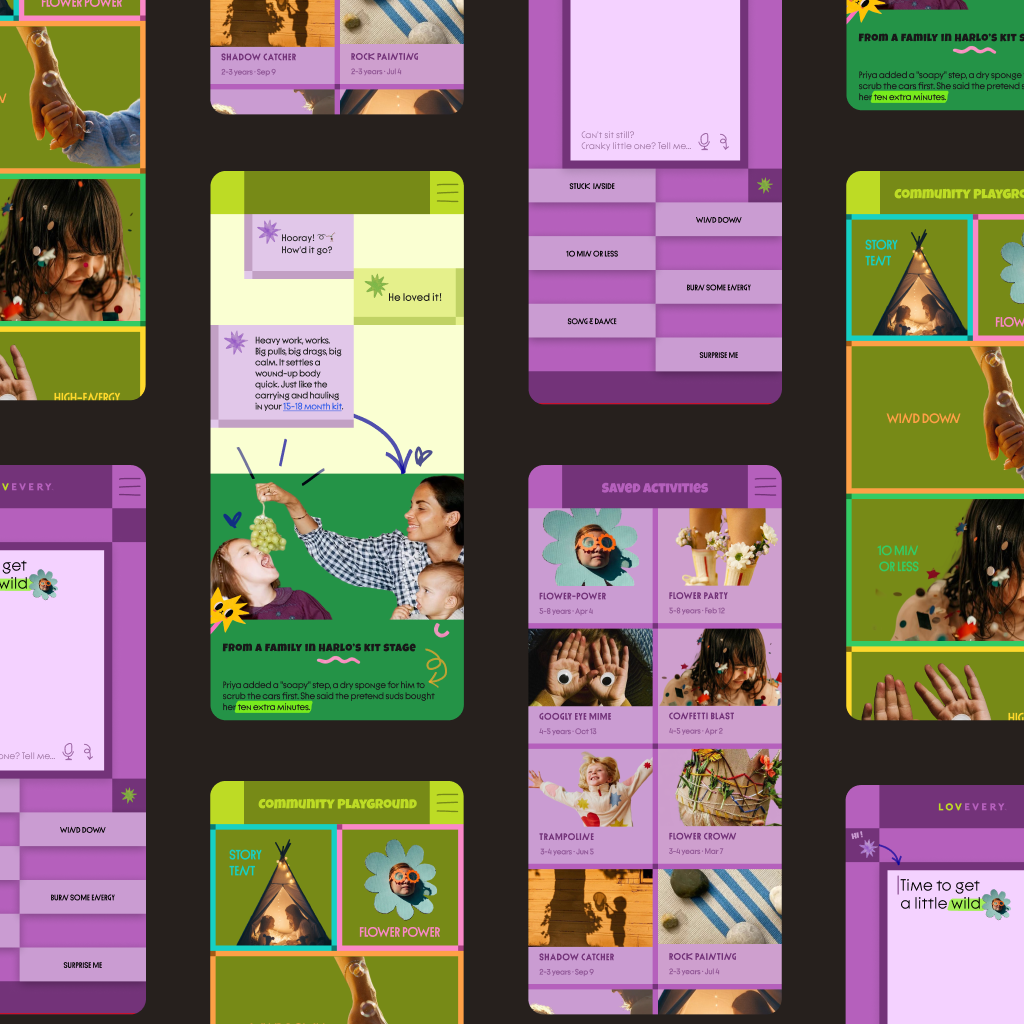
Lovevery, Your Daily Playmate
An AI chat playmate and its design system, for parents who want to stay in the moment of play.
[Sustainable Technology • Systems]
2040: Sustainable Economic Infrastructure
Forecasting future systems for a stewardship economy.
[Learning • Development]
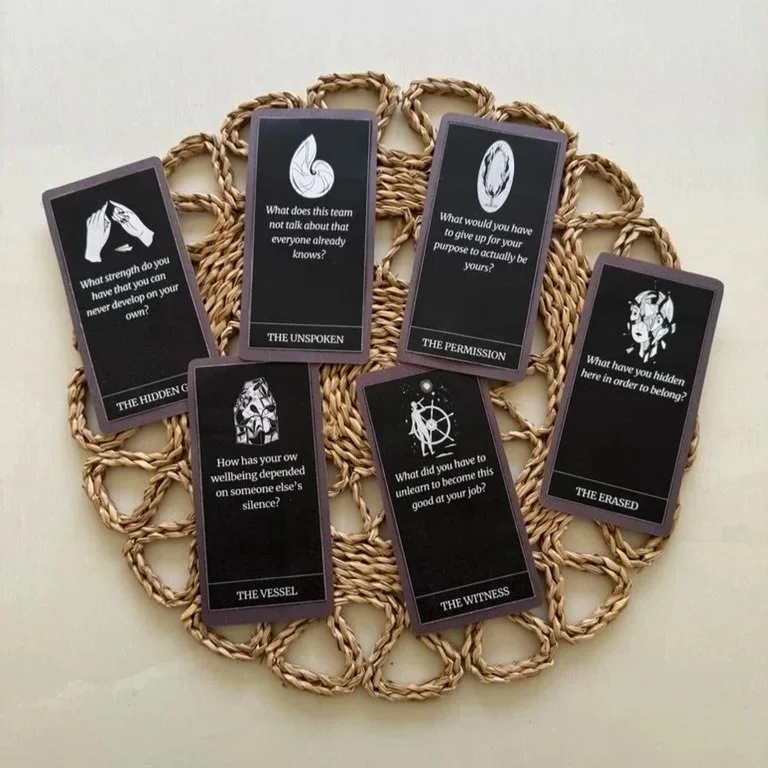
Design as a force for good
Expanding for deeper formation within modern Learning & Development practices.
Technology is a reflection of us. The question is whether we are honest about what it reveals.
I spent many a Saturday afternoon wandering through my parents' video rental store, traveling the world through stories far beyond my own imagination. In that store I found my love of storytelling, relationships, and communities. Twenty years later I still see those stories. As a designer, I think about how what I build does the same: how it shapes world views, expectations, and earns trust over time, or loses it.

Launch. Adoption. Engagement. Retention. These are real and necessary tools of the trade, and for most they are the full picture. What falls outside that frame fades to black. Products normalize certain behaviors and train us through years of use. The communities reached last become edge cases, with logical tradeoffs for what it costs for them to wait. When accountability is a sliding scale in the design process, the reckoning does not disappear. It just gets scheduled for after launch.

Understanding how consequences can be used as design material changes the scope of today's designer. The extended lifecycle of products, services, and organizations, the behaviors they normalize, the communities they affect over time, that is a deeper, and wilder design territory. Not someone else's problem after handoff. Building with reciprocity means that communities are better off for having been designed for. Extraction leaves the opposite. How do we give back in proportion to what the work requires? How do we build teams capable of closing systemic gaps rather than designing around them?

I do not have a complete answer, particularly around how we grow what matters without scaling harm for communities on the other side of power and resources. What I have is a practice and convictions I am willing to stake my career on. Every project, organization, and team I work alongside is an opportunity to demonstrate that consequence-aware design produces better outcomes, for users, for communities, for the business, and for the people doing the work.

The legacy I seek is not in the products I ship. It is a culture and an ethos; a curiosity and a passion to ask better questions and build systems to shape how people see their world. What comes next should work for all of them.


—Christina
Practice Areas
I analyze the governance and accountability structures underneath.
-
The systems we built to manage resources rarely start with the people that it has failed.
Designing smarter energy and economic infrastructure means closing the gap between the system's surface and what people need it to do. The system needs to work for everyone in it, including the ones it was not originally designed for. That is the measure that matters.
-
Care systems are built around institutional logic. The people who depend on them most are expected to navigate across varying circumstances, environments, abilities and backgrounds.
From housing to health needs, communities carry the heaviest consequences of poor design and are rarely in the room when decisions get made. The work starts from their reality, not from institutional convenience.
-
Most learning systems are built for linear completion and bragging rights. Fewer are built for the kind of friction that shifts their worldview.
Designing for the modern learner means creating moments that pause, introduce productive difficulty, and make space for understanding to take hold. The goal is expanding capability for life and work, not a check-mark and a certificate.
-
Organizations create spaces to incubate, to signal what lies on the horizon. Fewer build the infrastructure to act on what the lab learns.
Good ideas are not the bottleneck inside innovation. Accountability is. The structures that move insight from prototype to practice, without losing what made it worth building, are where the real design work lives. Moving fast without them leaves a trail of glitter for someone to clean up.
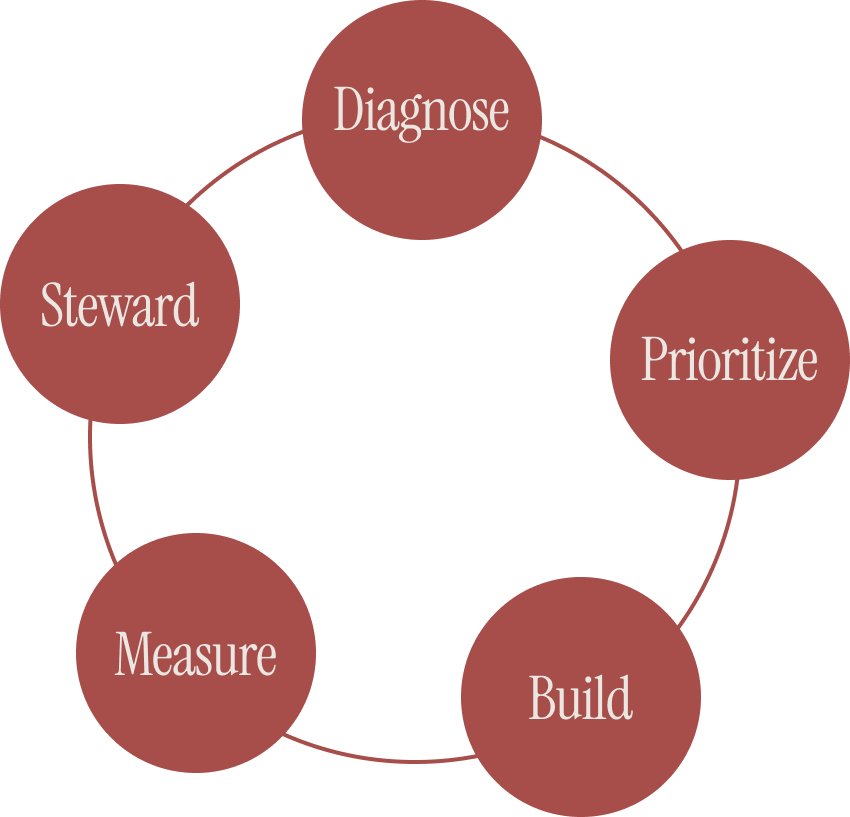
My process
Tells a Story
Good process builds the conditions where the right decisions keep getting made. Every project I take on moves through five stages with that in mind.
How I lead
Candor Builds Trust.
Tell people what they need to hear before they know to ask for it. Deliver it with enough care that they can hear it.
Curiosity Makes Space For Others.
Ask more questions than you answer. Practice consistently, until it becomes the culture.
Community Reinforces Our Humanity.
Invest in the designers coming up. Tend the relationships, rituals, and networks that tend you back. Reciprocity shows up in practice, not in principles.
Leadership • Observations • learnings
The Leaders Who Shaped Me
A leader's influence is felt long after they have left the room. The ones worth following lead thoughtfully, assertively, and stay grounded while passing it forward.Working In Global Organizations
Twenty years inside global organizations taught me that culture is made in its hardest moments.

What gets rewarded, what gets excused, and who gets heard when the stakes are high. Design earns influence through outcomes and business fluency.
The Hardest Room To Be In
Think of the leader who changed how you work. Odds are they told you something hard before you knew you needed to hear it.

Feedback is the primary leadership act. Promotion decisions are cultural signals. They tell everyone what the organization actually values. That clarity does not come from good intentions, it comes from the system you build before challenges arrive.
"Leadership is not about being in charge. It is about taking care of those in your charge.”
-Simon Sinek Leaders Eat Last
commitment to Culture • Collaboration • Community
Observe Before Prescribing.
Walk into a new organization the same way you walk into a new design problem. Map the power dynamics, the informal structures, the gap between the stated culture and the lived one. Understand what is holding the current system together before changing any of it.
Disagree, Then Commit.
Build relationships in private. Reach alignment in public. When the decision goes a direction you would not have chosen, say so once with clarity, then execute as if it were your own. Credibility lives in the follow-through.
Document Decisions, Not Just Outcomes.
Documented decisions survive your departure. Process integrity protects the work, the team, and the organization. Build it like someone you respect will inherit it.
Humans Lead, Technology Follows.
AI accelerates the work that should be accelerated and has no place in the judgment calls that require accountability. The designer is still responsible for what ships. That accountability does not distribute to a tool.

Let’s Connect
Christina is a second-generation Korean American with twenty years of designing at scale. Now building for what lasts. She’s currently available for individual contributor and lead roles in organizations in active transition toward something more equitable and durable.
Select Clients
Netflix
Meta
Magic Leap
Stack
Figma
Adobe
Unity
Blender + Maya
Pen + Paper
Coffee
Strengths + Attributes
Systems Thinking
Candor
Cross-functional Fluency
Comfort with Ambiguity
Philosophy Grounding in Practice
Published April 2026 · Medium · 7 min readEvery product ships twice. It is where the product reveals what it will become.
A deeper argument for why consequences belong at the center of design practice, not at the periphery.